

Transit at Tan Son Nhat Airport (SGN) takes about 45 – 60 minutes if you’re flying international-to-international on one ticket and staying inside Terminal 2, no visa needed. If you’re connecting to a domestic flight (Terminal 1 or the new Terminal 3), you must clear immigration with a valid visa or e-visa, and should allow at least 3 hours for baggage claim, customs, and the terminal transfer.
👉 Need help with your connecting flight? We’ve got your back. AVIA has been assisting +50,000 travelers from over 210 countries. Our team works 24/7 even weekends and public holidays to make every airport journey in Vietnam smooth, fast, and stress-free.
| Connecting Fast Track at Tan Son Nhat Airport |
| From $172 per person |
| What you get: |
| ✅ Meet & greet at arrival gate or aerobridge exit ✅ Immigration & Customs assistance ✅ Priority lane access where applicable ✅ Baggage collection & re-check support ✅ Guidance for terminal transfer ✅ Escort to your next boarding gate ✅ 24/7 WhatsApp support |
Free cancellation and full refund up to 24 hours before service.
If you want more details and options, spend your 3 – 5 minutes reading our guide below. We’ll cover terminal layouts, visa requirements, minimum connection times, common mistakes, and what to do during a layover.
Overview of Tan Son Nhat Airport (SGN)
Tan Son Nhat International Airport (SGN), located in the heart of Ho Chi Minh City, is the busiest aviation gateway in Vietnam. To navigate a transit at Tan Son Nhat Airport successfully, you must first understand the layout.
Unlike some airports where terminals are connected by airside trains, SGN requires a physical walk or shuttle ride between buildings, often involving passing through immigration.
For live flight boards and official terminal maps, you can also check the airport’s own information page on Tan Son Nhat International Airport’s official site (operated by the Airports Corporation of Vietnam).
Key Facts About Tan Son Nhat Airport (SGN)
- Location: Tan Binh District, approximately 7km from the city center.
- Airport Code: SGN.
- Role: The primary international gateway to Southern Vietnam and a critical base for Vietnam Airlines, Vietjet Air, and Bamboo Airways.
👉 Check our full guide at Tan Son Nhat International Airport.
Terminal Layout for Transit Passengers
The airport is now split into three distinct terminals. Knowing which one you land in and which one you depart from is vital.
- Terminal 1 (T1): Dedicated to Domestic flights for smaller carriers and select low-cost airlines.
- Terminal 2 (T2): The International terminal. All flights arriving from or departing to foreign countries use T2.
- Terminal 3 (T3): The newest and largest Domestic terminal, primarily serving Vietnam Airlines and major domestic routes.
- Distance between terminals: T1 and T2 are about 500 meters apart (a 5-10 minute walk via a covered walkway). T3 is located further away and requires a shuttle bus or taxi (10-15 minutes).
Transit Process at Ho Chi Minh Airport
The transit process at SGN changes according to your origin, destination, ticket arrangement, baggage status and onward airline. The four routes below preserve the practical structure passengers need when planning a connecting flight at Ho Chi Minh Airport.
How does an international-to-international transfer work at SGN?
This applies if you are flying from one country (e.g., India or Australia) through Ho Chi Minh City to another country (e.g., Japan or Korea).
The Process:
- Arrive at T2: Follow the Transfer or Connecting Flights signs.
- Transfer Desk: If you already have your second boarding pass and your bags are checked through, head straight to the transfer security area.
- Security Check: Pass through the transit security screening on the 2nd floor of T2.
- Departure Lounge: Proceed to the 3rd floor to find your departure gate.
Distance: All steps occur within Terminal 2.
Transport: Walking.
Time: Approximately 45-60 minutes.
Important Notes:
- If you have separate tickets and need to collect baggage, you must have a visa to enter Vietnam, collect your bags, and check in again at the departure hall.
- If you’re on a single ticket, your bags are usually checked through to your final destination.
How does an international-to-domestic transfer work at SGN?
This is common for travelers heading to beach destinations (Da Nang, Nha Trang, Phu Quoc) or Hanoi. Most major domestic flights now depart from the new T3.
The Process:
- Immigration: After landing at T2, you must pass through Immigration. You need a valid visa or visa exemption.
- Baggage Claim: You must collect your checked luggage at T2, even if it was tagged to your final destination (in most cases).
- Customs: Clear customs with your luggage.
- Terminal Transfer: Exit T2 and turn right. Walk 5-10 minutes under the covered walkway to T1 (or take a shuttle if your flight is at T3).
- Re-check Baggage: Go to the domestic check-in counter of your airline in T1 or T3.
- Security: Pass through domestic security and find your gate.
Distance: ~500m to T1; ~2km to T3.
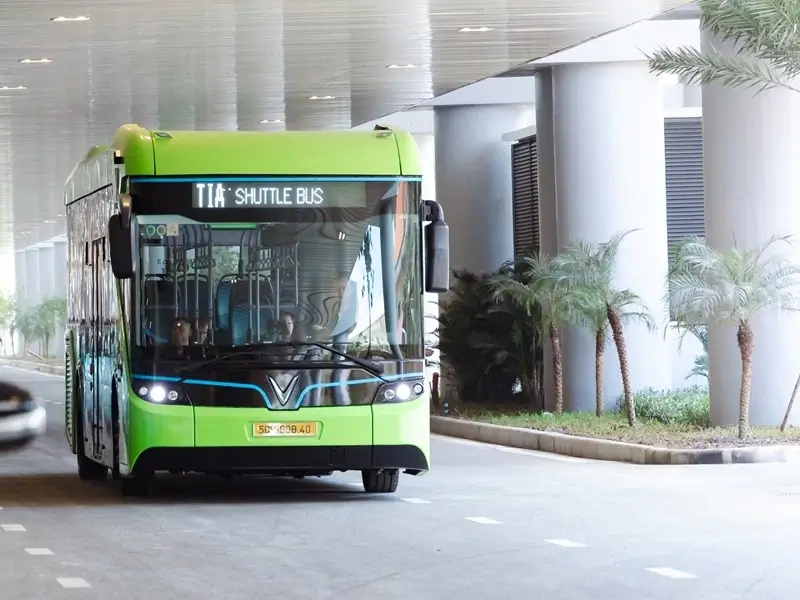
Transport: Walking to T1; Shuttle bus to T3.
Important Notes:
- Allow at least 3 hours for this connection. Immigration and baggage queues can be very long.
- You must enter Vietnam to catch a domestic flight. This means you need a visa.
For Domestic to International Transfer
The reverse process for your flight home.
The Process:
- Arrive at T1 or T3: Collect your luggage at the domestic terminal.
- Terminal Transfer: Walk (from T1) or take the shuttle (from T3) to the T2 International terminal.
- International Check-in: Head to the 2nd floor of T2 to check in and drop your bags.
- Immigration and Security: Pass through exit immigration and international security.
Distance: 500m to 2km.
Transport: Walking or Shuttle bus.
Important Notes:
- Ensure you have your passport and any required visas for your destination ready before checking in at T2.
- Allow at least 2.5 hours for this connection.
For International to Phu Quoc (Special Case)
Phu Quoc offers a 30-day visa exemption for international tourists. However, the transit in Ho Chi Minh airport can be tricky.
Key Points:
- Visa Exemption: To get the Phu Quoc visa-free entry, you must technically stay in the transit area or have a sealed transfer.
- The Reality: In 2026, most passengers still need to clear immigration at SGN if they are switching to a domestic carrier to Phu Quoc.
Steps:
- Immigration: Inform the officer you are transiting to Phu Quoc. They may process you under a specific transit category.
- Domestic Transfer: Follow the International to Domestic process above.
- Flight: Board your domestic flight to Phu Quoc at T1 or T3.
Important Note: Even with the exemption, if you need to change terminals, you are technically entering the country. Most immigration officers will allow this specifically for Phu Quoc, but it is always safer to have a pre-approved visa or e-visa just in case.
Minimum Connection Times at Tan Son Nhat Airport
To avoid missing your connecting flight, here are the minimum connection times recommended by experienced travelers:
| Transfer Type | Recommended Time | Minimum Safe Time |
|---|---|---|
| International to International (same ticket, same terminal) | 2 hours | 1.5 hours |
| International to International (separate tickets) | 3 hours | 2.5 hours |
| International to Domestic (T1 or T3) | 3 hours | 2.5 hours |
| Domestic to International | 2.5 hours | 2 hours |
| Domestic to Domestic | 1.5 hours | 1 hour |
Pro Tip: Always allow extra time during peak travel seasons (Tet holiday, summer months) or if you’re traveling with checked baggage.
How do you transfer between T1, T2 and T3 at Tan Son Nhat Airport?
For T2 to T1, exit the international terminal after customs, turn right and follow the pedestrian route to the domestic terminal. The walking estimate does not include time spent finding the exit, waiting for companions or moving with large baggage.
For T2 to T3, AVIA directs passengers to the free shuttle stop at pole 15 outside T2. In the reverse direction, passengers arriving at T3 collect baggage, go to the ground floor and use stop 18A for the shuttle to T2. Airport signs and stop locations may be updated, so check the signs before boarding.
| Transfer | Published navigation detail | Practical planning note |
|---|---|---|
| T2 → T1 | Walk right after exiting T2; about 4-5 minutes | Add time for baggage, wayfinding and domestic check-in |
| T1 → T2 | Use the pedestrian path; about 4-5 minutes | Confirm that the international boarding pass is issued |
| T2 → T3 | Free shuttle from pole 15; about every 15 minutes; journey about 20 minutes | Add waiting time and allow for road conditions |
| T3 → T2 | Free shuttle from stop 18A on the ground floor | Retrieve baggage first unless the airline confirms otherwise |
👉 Need Vietnam Connecting Fast Track? Contact us for instant support via WhatsApp/Hotline (VN) +84 946 583 583
Free cancellation and full refund up to 24 hours before service.
Common Problems at SGN Airport
A transit in Ho Chi Minh airport can be plagued by real-world issues that don’t appear on official websites:
Long Queues at Immigration: It is not uncommon to wait 60-90 minutes at immigration during the morning and evening rushes. This is the single biggest cause of missed connections.
Confusing Terminal Transfer: The walk from T2 to T1 is outdoors. If it’s raining (monsoon season), you will get wet. There is no indoor link. T3 requires a shuttle bus which adds 10-15 minutes.
Limited English Signage: While major signs are in English, smaller announcements or directional changes during construction can be confusing.
Delays in Baggage Handling: Luggage can take 30-45 minutes to arrive on the belt, cutting deeply into your transfer time.
Tight Connection Times: Many booking sites sell flights with a 90-minute connection. In SGN, this is almost impossible for an International-to-Domestic transfer because of the luggage, terminal change, and immigration queues.
What Others Don’t Tell You:
- The shuttle bus to T3 can be crowded and you might need to wait for the next one.
- Immigration queues for visa-on-arrival are significantly longer than for those with e-visas.
- If you’re transiting on separate tickets, you need to factor in time for check-in and baggage drop.
- Some airlines close check-in 45-60 minutes before departure, so arriving with only 30 minutes to spare is risky.
8 Tips for a Smooth Transit at Ho Chi Minh Airport
To ensure your transit at Tan Son Nhat Airport is stress-free, keep these tips in mind:
- Minimum Connection Time: Always allow 3+ hours for international-to-domestic transfers. SGN is prone to delays and long queues.
- Do not join immigration automatically after an international arrival. If you may qualify for an airside international transfer, look for the transfer counter and connecting-flight signs first. Joining the immigration queue can move you into the entry process unnecessarily and make the connection more complicated.
- Keep entry documents ready even when you expect an airside transfer. A baggage, ticketing or airline restriction can change the required process. Having the correct visa, exemption evidence or airline confirmation available reduces the risk of discovering at SGN that you cannot complete a landside self-transfer.
- Check Your Terminal: Don’t assume you are at T1. Double-check your boarding pass to see if you depart from the new Terminal 3.
- Download Ride-Hailing Apps: Install Grab or Xanh SM (electric taxis) before you land. They are much safer and cheaper than random airport touts.
- Baggage Re-check: Always ask at your origin airport if your bags are checked through to the final destination.
- Stay Hydrated: SGN can be very humid. Buy water once you pass security; it’s much cheaper than in the city but still essential.
- Fast Track is Worth It: If you have less than 2 hours to connect, booking a fast track service is highly recommended.
Why Choose Connecting Fast Track Service at Tan Son Nhat Airport
For those who want to avoid the risks of a missed connection Vietnam, a fast track service is the ultimate solution.
| Feature | Self-Transit | Connecting Fast Track |
| Immigration | Standard queue (45-90 min) | Priority lane (10-15 min) |
| Terminal Transfer | Find shuttle/taxi yourself | Guided escort / Private shuttle |
| Baggage | You find and carry it | Assistance with luggage |
| Check-in | Stand in line again | Priority check-in assistance |
| Risk of missing flight | High | Low and controlled |
| Stress level | High, especially after long flights | Low |
| Support | None | Full assistance |
| Overall experience | Unpredictable | Smooth and structured |
What You’ll Receive with AVIA:
Our Ho Chi Minh airport transit service provides a dedicated assistant who meets you at the bridge. They guide you through a priority lane for immigration, help you collect your bags, and use an internal vehicle to whisk you to your next terminal. This is especially vital for families with children or travelers with tight schedules.
👉 Need Vietnam Connecting Fast Track? Contact us for instant support via WhatsApp/Hotline (VN) +84 946 583 583
Free cancellation and full refund up to 24 hours before service.
Where to Stay or What to Do During a Layover
If your connecting flight Ho Chi Minh Airport involves a long wait, you have a few options.
Short Layover (Under 4 Hours)
Lounges: T2 has several high-quality lounges (Rose Lounge, Apricot Lounge) that offer showers and buffet food. These can be booked in advance or paid for at the door.
Airport Shops: Explore the 3rd floor of T2 for local souvenirs and high-end duty-free. T1 and T3 have fewer options but still enough for a quick browse.
Long Layover (6+ Hours)
Nearby Coffee Shops: Just outside the airport gates (Truong Son Street) are dozens of amazing Vietnamese coffee shops. Try coconut coffee or egg coffee for a local treat.
Vinh Nghiem Pagoda: A beautiful temple just 10 minutes away by taxi. A peaceful escape from the airport bustle.
City Trip: With 6+ hours, you can take a Grab to District 1 to see the Notre Dame Cathedral and the Central Post Office. Allow 1 hour each way for travel.
Hotels Near SGN
If you need proper rest, there are several hotels within a 5-minute walk of the airport gates:
- Harmony Airport Hotel: Close to the airport with free shuttle
- Thanh Truc Hotel: Budget option within walking distance
- Le Saigon Hotel: Mid-range with good reviews
Important: All hotels require you to clear immigration and have a valid visa.
👉 For further hotel options, read our guide on Ho Chi Minh Airport Transit Hotel Guide for Short and Overnight Stays
Frequently Asked Questions
Yes, only for international-to-international connections. All domestic transfers require you to exit the secure zone and enter the public area, which means you must clear immigration. You cannot walk directly from T2 to T1 or T3 without going through the public area.
Not always. Baggage may be checked through under an eligible airline arrangement, but separate tickets and some carrier combinations require collection and re-checking. Ask the first operating airline where the bag is tagged and read the destination code on the baggage receipt. International-to-domestic passengers should follow the airline’s instructions for collection, customs and domestic re-check.
After completing the required arrival steps in T2, follow signs to the inter-terminal shuttle and get on the free shuttle bus. The T2 pickup point is at pole 15, a service approximately every 15 minutes and a journey of about 20 minutes. Stops and schedules can change, so confirm the signage at the terminal and allow for possible waiting time.
For terminal transfers, expect at least 2-3 hours. International-to-international transfers usually take about 45-60 minutes. International-to-domestic transfers require at least 3 hours due to immigration queues and terminal changes. Always allow extra time during peak hours.
No, it is not required. Fast Track is an optional assistance service and does not replace visa, ticketing, or airline requirements.
However, Connecting Fast Track at Ho Chi Minh Airport may be worth considering if:
- You have a tight connection, especially under 3 hours.
- You are traveling with children, elderly family members, or a larger family group.
- You have multiple or heavy bags and would benefit from additional assistance.
- You are unfamiliar with Tan Son Nhat Airport and do not want to spend time finding the correct terminal, transfer route, or next check-in area.
- You simply prefer having a local airport assistant guide you through the connection process, giving you more peace of mind between flights.
Fast track is most useful when your priority is to save time, reduce uncertainty, and have someone guide you through your connection at Ho Chi Minh Airport.
If you stay within the T2 transit area for less than 24 hours on a single ticket, you do not need a visa. However, if you are transferring to a domestic flight (T1 or T3), you must have a visa to enter the country. Check your specific situation before traveling.
The best way to travel from Tan Son Nhat International Airport to the city center depends entirely on your priorities regarding budget, comfort, and time:
- For Maximum Comfort and Speed: Booking a private transfer is your best option, and the Airport Transfer service by AVIA stands out as a premier choice. We offer fixed-price private car options ranging from 4-seat, 7-seat, to 16-seat air-conditioned vehicles, completely eliminating the hassle of taxi queues or scams.
With prices starting from $22 per car, the service includes real-time flight tracking to ensure timely pickup, instant confirmation via email/WhatsApp, and 24/7 human customer support. It provides a direct, door-to-door journey straight to your hotel, making it ideal if you are traveling with heavy luggage, in a group, or arriving late at night.
Contact AVIA via WhatsApp +84 946 583 583 for detailed quote or check our public pricing NOW!
- For Budget Travelers: Bus 109 and 152 are the top choices. It is a high-quality, air-conditioned public bus that connects the airport directly to major spots in the city center. It offers a great balance between cost-efficiency and convenience, costing only a fraction of a taxi fare while still providing ample space for luggage.
- For Tech-Savvy Travelers: Ride-hailing apps are also widely available. While convenient, keep in mind that you will need to walk to a designated ride-hailing pickup area located a short distance away from the main arrival terminal doors to meet your driver.
AVIA currently provides two services at Tan Son Nhat International Airport (SGN):
- Arrival Fast Track: Our staff meets you at the arrival gate and whisks you through a priority lane at immigration. No waiting, no confusion.
- Departure Fast Track: Breeze through check-in and security for your flight out of Ho Chi Minh City.
- Connecting Fast Track: Avoid missing your next connecting flight with a dedicated guide
- Airport Transfer: We provide professional, English-speaking drivers with modern vehicles. We track your flight, so even if you are delayed, your ride is waiting.
- Vietnam eSIM: Get connected the moment you land without searching for a SIM card stall.
👉 Want a faster, stress-free airport experience? Explore our services at Tan Son Nhat International Airport here.
Conclusion
The safest way to plan transit in Ho Chi Minh Airport is to identify the exact route, confirm baggage handling and check the current terminal before departure. Use airline-approved timings rather than a universal connection rule, and keep the required Vietnam entry documents ready whenever the process may take you landside.
Want a stress-free transit in Ho Chi Minh Airport? AVIA offers Connecting Fast Track services with personalized meet and greet, priority immigration, and assistance with terminal transfers and baggage handling. Plus, we provide high-speed Vietnam eSIMs to keep you connected from the moment you land.
👉 Book AVIA today to ensure your next transit in Ho Chi Minh airport is the easiest part of your journey!
24/7 support via Email & WhatsApp


